The Triple Anchor: Merging Confidence, Precision Communication, and Authentic Presence
Communication is not just about words; it is the strategic convergence of vocal clarity, posture, and psychological resonance that commands attention in boardrooms and auditoriums.

Sanjeewa Bogodage
Certified Toastmaster & Corporate Trainer
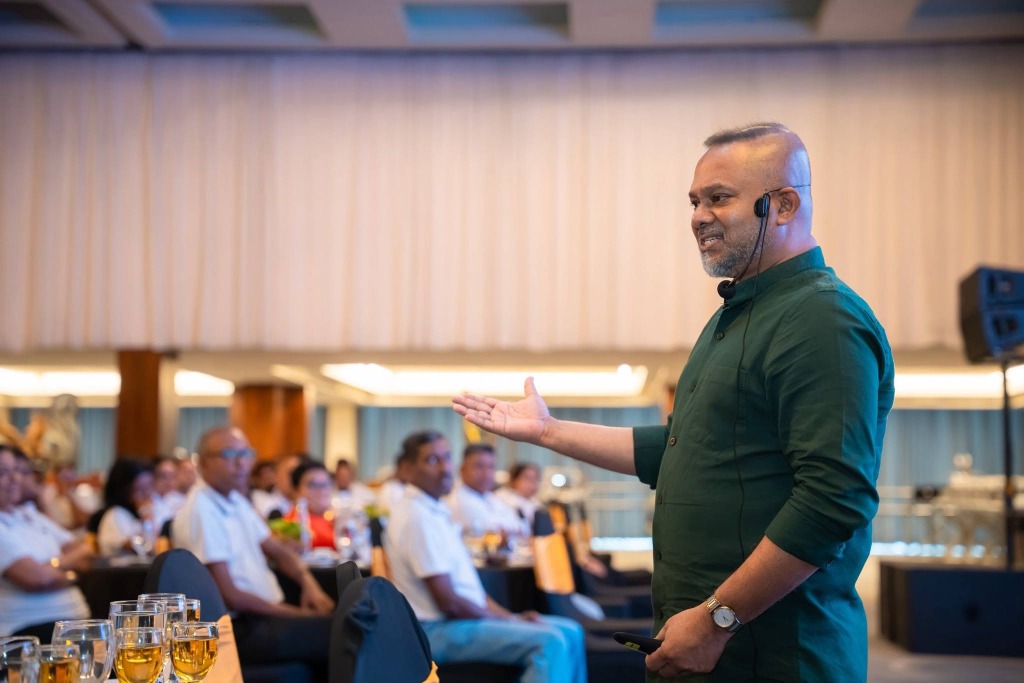
The Triple Anchor: Merging Confidence, Precision Communication, and Authentic Presence
In my journey as a Certified Toastmaster, public speaker, and corporate trainer, I have worked with thousands of executives, factory managers, sales directors, and aspiring professionals. A recurring question often posed is:
"How do I speak so that stakeholders, clients, and my executive committee truly listen and act?"
The answer does not lie in convoluted jargon or dramatic theatrics. It lies in what I term the Triple Anchor: Confidence, Precision Communication, and Authentic Presence.
Anchor 1: Internal Confidence Through Preparation
Confidence is rarely an innate personality trait; it is a direct by-product of internal readiness. When individuals feel uncertain, their speech accelerates, their voice rises in pitch, and nervous filler words dilute their message.
To cultivate unshakable confidence before crucial presentations or high-stakes negotiations:
- Master the Core Thesis: Distill your entire speech or proposal into a single 15-word sentence. If you cannot summarize your point in 15 seconds, your audience will not remember it after 15 minutes.
- Anticipate Counter-Arguments: In commercial and HR negotiations, the most convincing communicators have already calculated the client's primary resistance points.
- Physical Grounding: Stand with balanced weight distribution, shoulders relaxed, and breathe deeply from the diaphragm rather than shallow chest breaths.
Anchor 2: Precision Communication
Precision means maximum impact with minimal cognitive friction. Too many corporate leaders bury key insights beneath mountains of bullet points and defensive narratives.
The Rule of Three (Structuring Thoughts on the Fly)
Whenever you are called upon spontaneously in an executive meeting, organize your thoughts immediately into three anchors:
- The Context (What is happening right now?)
- The Impact (Why does this matter to our bottom line or team?)
- The Recommended Action (What specific next step must we take?)
This structure conveys decisiveness, clarity, and analytical rigor.
Anchor 3: Authentic Executive Presence
Executive presence is not about intimidation; it is about resonant connection. People follow leaders who are emotionally grounded and authentic.
| Trait | Old-School Executive | Modern Authentic Leader |
|---|---|---|
| Tone | Authoritarian & aloof | Empathetic yet resolute |
| Eye Contact | Staring down the room | Engaging individuals warmly |
| Vocal Variety | Monotone or bombastic | Dynamic pacing, purposeful pauses |
| Handling Mistakes | Deflective or defensive | Transparent, solution-focused |
Practical Exercise: The 60-Second Challenge
Try this actionable technique in your next team meeting:
- Pause for 2 full seconds before answering a complex question. Silence denotes composure and thoughtfulness, not hesitation.
- Eliminate filler phrases like "I just wanted to say" or "This might be a stupid question, but..."
- Conclude with a clear question or prompt: "What are your thoughts on this direction?"
When you master the synergy of confidence, precision, and presence, your words inspire confidence and galvanize people into action.
Sanjeewa Bogodage
HR Consultant for Brandix Group • Visiting Lecturer at CIPM & HRMI
Multi-Award-Winning Corporate Trainer awarded the Most Outstanding Corporate Trainer Of The Year 2026 (Shramabhimani Awards) and Most Outstanding HR Trainer of the Year 2025 (People's Excellence Award). Certified Toastmaster, Lean Practitioner, and Compliance Auditor.
Continue Reading
All ArticlesMastering Modern People Management: Shifting from Supervisory Control to Human Empowerment
Traditional management relies on compliance and oversight. Modern high-performance organizations thrive when leaders cultivate psychological safety, emotional intelligence, and proactive accountability.
Shop Floor to Boardroom: High-Impact Supervisory Excellence in Fast-Paced Manufacturing
Frontline supervisors represent the critical link between corporate strategy and factory execution. Learn how Lean principles and proactive leadership drive world-class plant efficiency.
Why Theory-Heavy Training Fails: Architecting Behavior-Driven Corporate Transformation
Sitting through 80 slides of abstract theory creates zero lasting change. Real corporate transformation happens when experiential simulations, psychological hooks, and high-energy fun meet practical workplace reality.